What Is a Gate Opener Kit and How Does It Work?
A Gate Opener Kit turns a heavy gate into a controlled entry point. It usually combines a motor, control board, remote transmitters, safety sensors, and mounting hardware. Together, these parts open and close the gate with less physical effort.
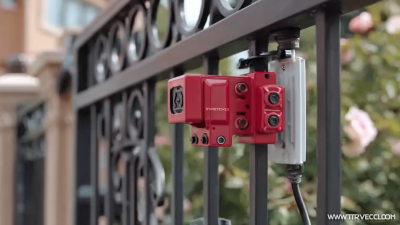
The motor moves the gate through an arm, chain, screw drive, or underground mechanism. The control board receives a signal from a remote, keypad, vehicle sensor, or smart device. It then starts the motor and monitors the movement. Photo-eye sensors can detect a person, vehicle, or object in the gate’s path. If something interrupts the beam, the system should stop or reverse the gate.
Choosing the right kit requires more than checking the gate’s weight. Gate length, hinge condition, opening direction, daily cycles, slope, and local weather all affect performance. A swing gate needs different hardware from a sliding gate. Steel gates may demand stronger hinges and brackets. Wooden gates can change shape after rain.
In field installations, small details often decide whether the system works smoothly. A slightly misaligned bracket can create noise, strain, or early wear. This is easy to underestimate. Reliable installation includes secure wiring, balanced gate movement, sensor testing, and a suitable power source. Manufacturer instructions remain important because control settings vary between models.
This guide explains how a Gate Opener Kit operates, what each component does, and where common installation mistakes occur. It also considers maintenance, safety features, and practical selection advice. No system is completely maintenance-free. Regular checks still matter.
What Is a Gate Opener Kit?
What Is a Gate Opener Kit?
A gate opener kit is a powered system that moves a driveway or pedestrian gate. It usually includes a motor, control board, mounting brackets, limit switches, remote controls, and safety sensors. Some kits also contain a battery backup, keypad, warning light, and manual release key. The motor transfers power through an arm, chain, or underground mechanism. That movement opens and closes the gate at a controlled speed.
It is not a magic box.
During installation, technicians match the kit with the gate’s weight, width, hinge condition, and opening direction. A sliding gate needs different hardware from a swinging gate. Poor alignment can make the motor work harder and shorten its service life.
Safety sensors detect people, vehicles, or obstacles near the closing path. The controller should stop or reverse movement when resistance appears.
According to Grand View Research’s automatic gate and door opening system report, the market is projected to expand steadily through 2030, partly because property owners seek convenient access and improved control. The report also highlights growing interest in integrated security features.
However, automation does not repair a damaged gate. That assumption is often wrong. Regular checks of cables, hinges, sensors, and battery condition remain essential for reliable operation.
What Components Make Up a Gate Opener Kit?
A gate opener kit is a coordinated system, not just a motor. Its main parts usually include an electric motor, gearbox, control board, power supply, receiver, remote controls, mounting hardware, and a manual release. Sliding gates often use a drive gear and toothed track. Swing gates usually use linear arms or articulated operators. Each design transfers motor torque differently.
Safety components are equally important. Photoelectric sensors create an invisible beam across the opening. If a vehicle, child, or pet interrupts it, the controller should stop or reverse movement. Pressure-sensitive edges provide another layer of protection. A backup battery keeps the system usable during a power outage, while limit switches tell the controller when the gate is fully open or closed. The enclosure protects these parts from rain, dust, and accidental contact. That small box matters.
MarketsandMarkets’ 2024 gate automation report projects the market to grow at roughly 6% annually through 2028, reflecting wider demand for automated access and connected controls. However, more electronics do not automatically mean better protection. Industry guidance, including UL 325 requirements, emphasizes monitored entrapment protection and safe operating limits. Field technicians often find that poor sensor alignment causes more trouble than motor failure. Battery capacity is also underestimated. A carefully sized kit should match gate weight, travel distance, daily cycles, slope, and local weather. Wireless controls are convenient, but signal interference can still create unreliable operation. The “smart” feature is sometimes the weakest part.
What Types of Gates Can Use an Opener Kit?
A gate opener kit combines a motor, control board, remote receiver, brackets, and safety sensors. Its job is simple: move a gate consistently after receiving an authorized signal. However, the correct kit depends on the gate’s movement, weight, length, and daily usage. A beautiful gate can still be a poor match.
Swing gates usually use articulated-arm or underground operators. They fit single and double leaves, provided the hinges move freely and the posts remain rigid. Sliding gates need a chain-driven motor and a level track or cantilever frame. They suit narrow driveways because the gate travels sideways instead of swinging outward. Bi-fold gates can also use specialized systems, but their folding points require careful alignment. Very light pedestrian gates may accept compact operators, while heavy steel gates need higher-duty equipment.
According to Grand View Research’s 2024 analysis, the global automated gates market was valued at approximately US$2.2 billion in 2023, with continued growth expected through 2030. That growth reflects wider use in homes, apartments, warehouses, and managed parking areas. Yet market growth does not remove engineering limits. A kit rated for a 400-kilogram gate may struggle with wind pressure, a sloped track, or frequent cycles. I have found that installers sometimes focus on weight alone. That is an incomplete test. The gate should be checked for balance, friction, stopping distance, and sensor placement. Safety requirements, including those addressed by UL 325, also influence installation and protective-device selection.
What Types of Gates Can Use an Opener Kit?
Typical suitability of common opener-kit mechanisms for different gate designs
Swing-arm kits are commonly used for hinged swing gates, while sliding-track kits are designed for sliding and cantilever gates. Underground kits can operate many hinged gates while keeping the mechanism concealed. Overhead or vertical-lift gates generally require specialized commercial operators rather than standard residential opener kits. Final selection depends on gate weight, length, construction, alignment, and available power.
How to Choose and Maintain a Gate Opener Kit?
A gate opener kit includes a motor, control board, remotes, safety sensors, mounting hardware, and sometimes battery backup. The controller receives a signal, powers the actuator, and moves the gate along a programmed path.
Slide gates use track-driven systems. Swing gates use articulated arms or underground actuators.
Grand View Research estimated the automatic gate and door opening system market at about USD 1.38 billion in 2023. Its report projects continued growth through 2030, driven partly by residential automation.
Choose the kit after measuring gate weight, length, slope, wind exposure, and daily cycles. A heavy gate needs more torque. A high-use entrance needs a stronger duty rating.
Check compatibility with photoelectric sensors, edge sensors, emergency release, and battery backup. Safety matters more than remote range.
A U.S. Consumer Product Safety Commission review recorded over 25,000 automatic-gate injuries from 2000 to 2009. That figure deserves attention. Select equipment designed around UL 325 and ASTM F2200 safety principles, then use a qualified installer where needed.
I would not trust a cheap kit without verified load data.
Maintenance should be simple and scheduled. Inspect hinges, rollers, chains, cables, and fasteners every month. Remove leaves and mud from sensor lenses.
Test automatic reversal with a soft object, never with a person. Check battery condition yearly.
Lubricate only approved points, because excess grease can trap grit. Keep the manual nearby.
No checklist is perfect. Storm damage, poor alignment, or a weakening hinge can still defeat a well-maintained opener.